UHF Handheld Terminals vs. Multi-Port Fixed Readers vs. Desktop USB Writers
Deploying passive tags reliably requires matching the transponder band and regional standard with the right reader form factor: mobile Android UHF terminals for walk-through counts, stationary 4- or 8-port readers for dock doors and conveyor tunnels, and compact USB desktop encoders for office issuance.
Side-by-side specification matrix
| Reader Architecture | Frequency Coverage | Antenna & Host Interface | Core B2B Workflow |
|---|---|---|---|
| Android UHF Handheld Terminal | 860–960 MHz UHF (FCC/ETSI regional) + optional 1D/2D barcode | Integrated circular antenna; Wi-Fi / 4G / USB-C + Android SDK | Walk-around retail cycle counts, shelf audits & mobile single-item search |
| 4- / 8-Port Fixed UHF Reader | 860–960 MHz UHF Gen2 | External coaxial SMA/RP-TNC ports to panel antennas; Ethernet/PoE & GPIO | Automated dock-door portals, conveyor sorting tunnels & forklift choke points |
| Desktop USB Writer / Encoder | 13.56 MHz (ISO 14443A/15693), 125 kHz LF, or desktop UHF | USB plug-and-play (PC/SC or HID/keyboard wedge) to office PC | Single-item NDEF encoding, card issuance, UID reading & sample QA validation |
Human-paced mobile audits vs. hands-free automated gates
Android UHF pistol-grip terminals allow one operator to walk through stores or racks sweeping shelves while pairing 1D/2D barcode fallbacks on the touchscreen. Automated warehouse portals instead mount external circular or linear antennas wired into a 4- or 8-port fixed reader triggered by photo-eye GPIO sensors.
Matching regional UHF regulations (FCC vs. ETSI)
Unlike global 13.56 MHz NFC desktop writers, UHF readers transmit regulated high power strictly inside regional allocations—such as 902–928 MHz in North America (FCC) or 865–868 MHz in Europe (ETSI). Always specify destination region alongside reader hardware.
Why desktop USB encoders remain indispensable for card and NFC teams
Even large UHF sites rely on desktop USB readers/writers (such as PC/SC 13.56 MHz encoders) to verify factory chip UIDs, test NDEF locks and initialize employee credentials at reception desks.
Representative models (11 shown)
- Fixed readers · Manufacturer reference
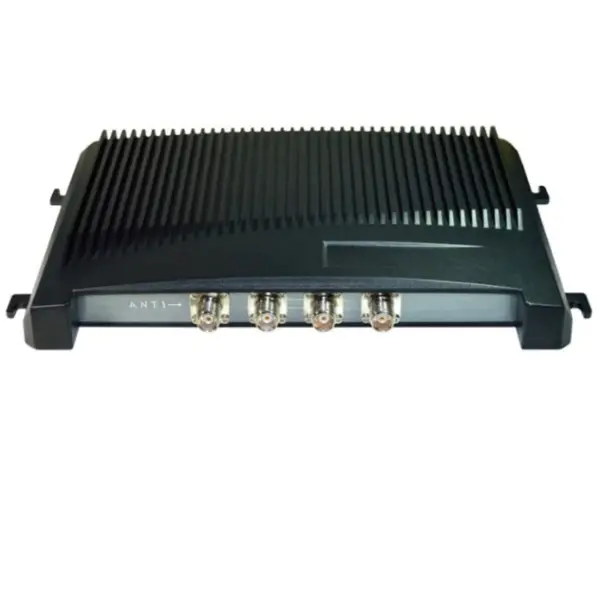
4-Port Fixed UHF RFID Reader
Reader model: XY-0068 / Size: 240mm(L) x 180mm(W) x 28mm(H)
 Fixed readers · Manufacturer reference
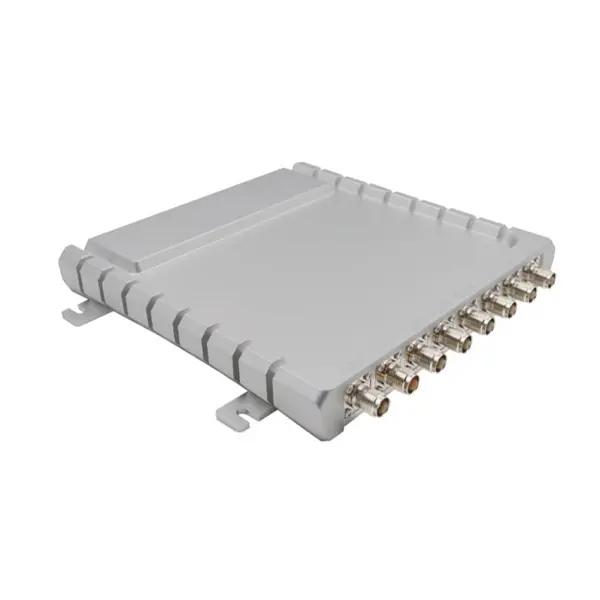
8-Port Fixed UHF RFID Reader
Size: 230mm(L) x 160mm(W) x 28mm(H) / Material: Die-cast aluminum
 Handheld readers · Manufacturer reference
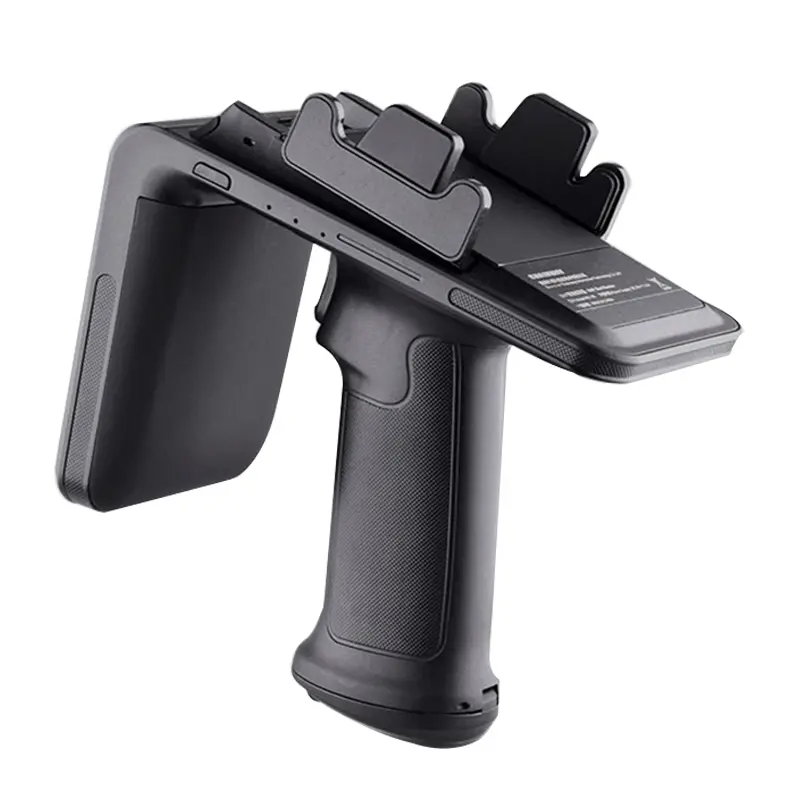
UHF Handheld Reader with Barcode Scanner
Reader model: X6 / Physical characteristics · Size: 143x76x140mm / 5.63×2.99×5.51in
- Handheld readers · Manufacturer reference
X6 Handheld UHF Data Collection Terminal
Reader model: X6 / Physical characteristics · Size: 143x76x140mm / 5.63×2.99×5.51in
- Format ref.Desktop readers and writers · Manufacturer reference
ACR122U NFC Contactless Reader and Writer
Reader model: ACR122U / Size: 98.0 mm (L) x 65.0 mm (W) x 12.8 mm (H)
- Format ref.Handheld readers · Manufacturer reference
Android UHF RFID Handheld Terminal
Reader model: X72 / Physical characteristics · Size: 164.2 x 80.0 x 24.3mm / 6.46 x 3.15 x 0.96in
- Format ref.Handheld readers · Manufacturer reference
Android Wi-Fi UHF Handheld Reader
Reader model: X72 / Physical characteristics · Size: 164.2 x 80.0 x 24.3mm / 6.46 x 3.15 x 0.96in
- Format ref.Handheld readers · Manufacturer reference
Portable RFID Tag Scanner
Reader model: X72 / Physical characteristics · Size: 164.2 x 80.0 x 24.3mm / 6.46 x 3.15 x 0.96in
- Format ref.Handheld readers · Manufacturer reference
UHF Handheld RFID Reader
Reader model: X72 / Physical characteristics · Size: 164.2 x 80.0 x 24.3mm / 6.46 x 3.15 x 0.96in
- Format ref.Handheld readers · Manufacturer reference
UHF RFID Label Reader
Reader model: X72 / Physical characteristics · Size: 164.2 x 80.0 x 24.3mm / 6.46 x 3.15 x 0.96in
- Format ref.Handheld readers · Manufacturer reference
X2 Portable Bluetooth UHF Reader
Reader model: X2 / Physical characteristics · Size: 282×117.5x32mm / 11.10×4.63×1.26in
Direct Engineering Inquiry
Request Handheld vs. Fixed vs. Desktop Readers comparison samples
Submit this short form directly on the page—no separate form page required.
Frequently asked selection questions
Can one single RFID reader handle 125 kHz key fobs, NFC cards and UHF pallet labels?
No: 860–960 MHz UHF terminals are physically separate RF systems from 13.56 MHz HF/NFC and 125 kHz LF desktop card encoders.
What is the advantage of an 8-port fixed UHF reader over a 4-port unit?
More RF ports allow one centralized reader to drive antennas on both sides, overhead and floor zones of wide dock portals or multi-lane conveyors.
Do desktop NFC USB readers work with Windows, macOS or Linux for writing URLs?
Yes—standard PC/SC compliant 13.56 MHz USB reader/writers work across major desktop operating systems using common NFC encoding tools and SDKs.