Comparativa de bandas RFID pasivas: UHF vs. HF/NFC vs. LF
Los sistemas RFID pasivos operan en tres bandas principales regidas por físicas distintas (acoplamiento magnético en LF/HF frente a retrodispersión electromagnética en UHF). Elegir la banda errónea provoca fallos junto a agua o metal o impide la lectura con teléfonos.
Matriz comparativa de especificaciones
| Banda y frecuencia | Normas principales | Acoplamiento y campo | Encaje B2B principal |
|---|---|---|---|
| LF (125 kHz / 134,2 kHz) | ISO 11784/11785 FDX-B; TK4100/T5577 | Inductivo cercano; atraviesa agua y tejido sin atenuación severa; lectura uno a uno | Crotales ganaderos, cápsulas implantables, llaveros vecinales y rondas |
| HF / NFC (13,56 MHz) | ISO/IEC 14443A, ISO/IEC 15693, NFC Type 2/4/5 | Inductivo cercano; zonas controladas; lectura nativa en iOS y Android (NFC) | Llaves de hotel, accesos, bibliotecas, carteles inteligentes y precintos anticlonación |
| UHF RAIN (860–960 MHz) | ISO/IEC 18000-6C / GS1 EPC Gen2v2 | Campo lejano; anticolisión masiva a varios metros; bandas FCC/ETSI | Inventario retail textil, palés, portales de muelle y activos metálicos de patio |
Por qué el uso con smartphones exige 13,56 MHz NFC
Los teléfonos iOS y Android integran hardware NFC exclusivamente a 13,56 MHz. Ni los llaveros de 125 kHz ni las etiquetas UHF de 860–960 MHz pueden leerse directamente con un teléfono sin un lector externo.
Lectura masiva de inventario frente a zonas acotadas
UHF Gen2 captura decenas o cientos de etiquetas por segundo al paso de un portal o lector portátil. En cambio, LF y HF caen bruscamente fuera de la bobina, evitando lecturas accidentales en bibliotecas o tornos.
Cómo afectan el agua y el metal a cada banda
El agua y el tejido vivo absorben UHF, haciendo superior el LF 134,2 kHz en ganado y útil HF cerca de bebidas, mientras el acero desnudo exige separadores PCB, cerámica o ferrita.
Modelos representativos (24)
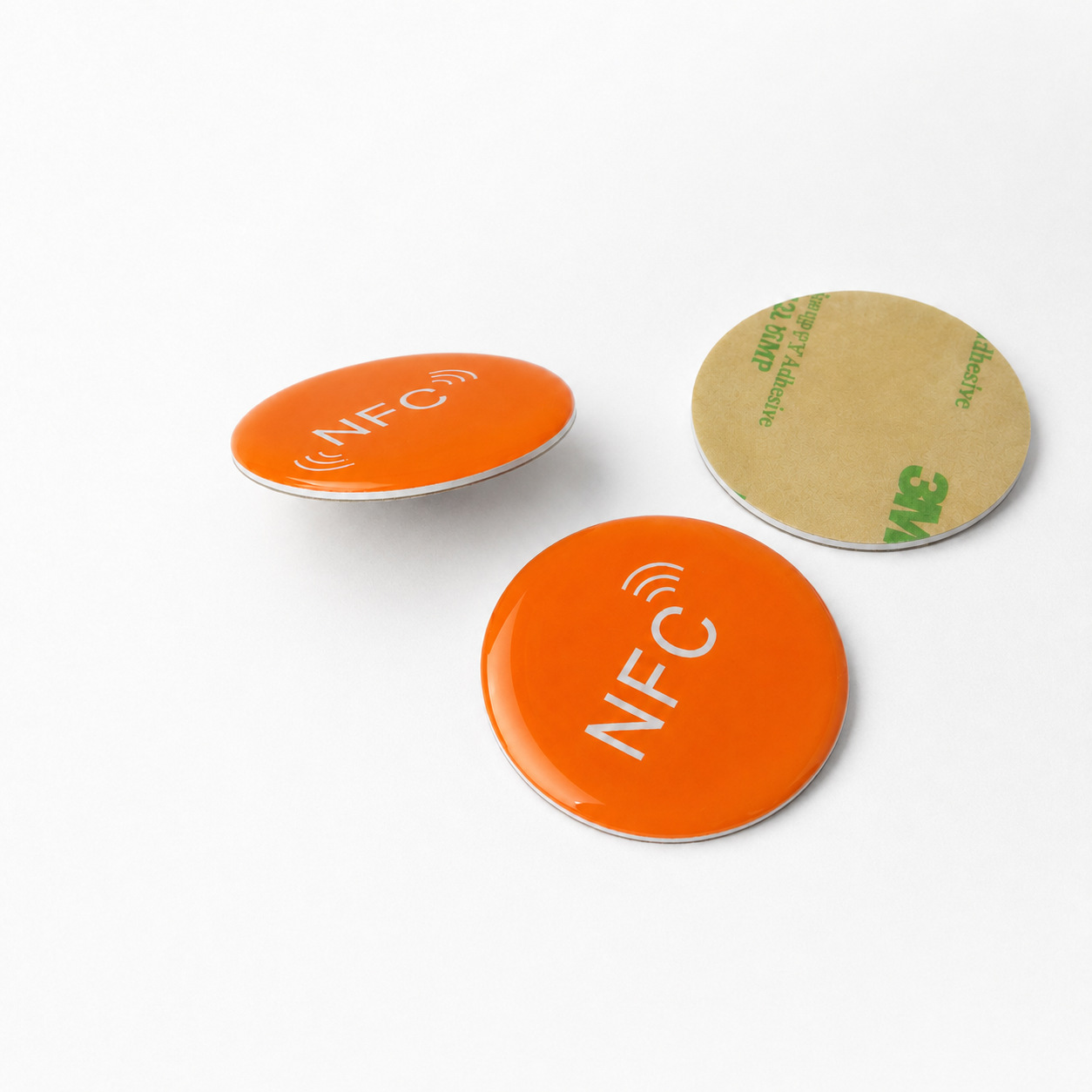
- On-metal NFC tags · Store catalog
25 mm On-metal Epoxy NFC Tag
Construction: Round epoxy on-metal tag / Diameter: 25 mm
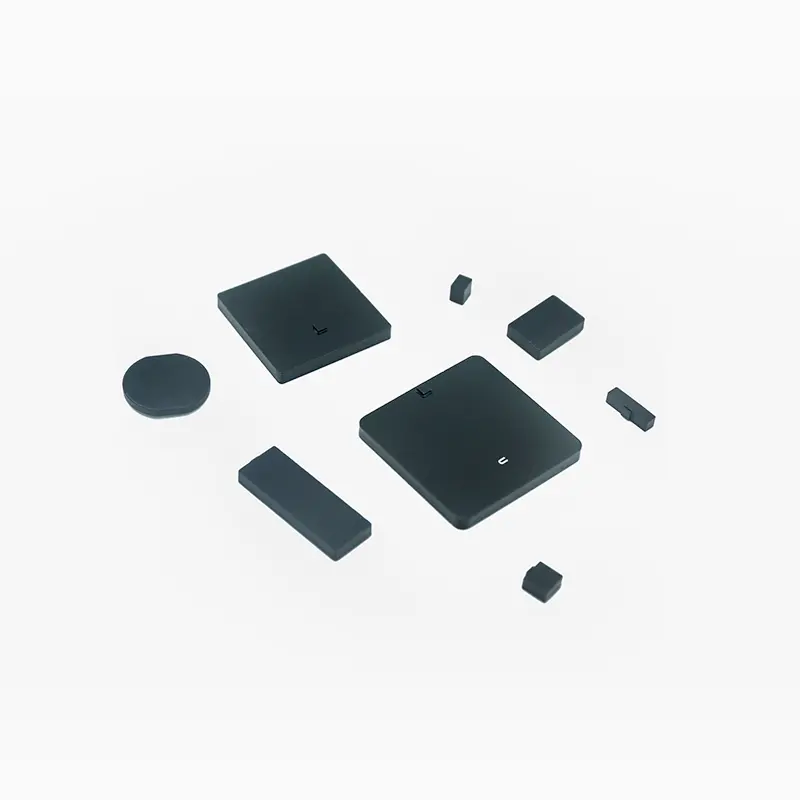 Ceramic on-metal tags · Store catalog
Ceramic UHF On-metal Tag
Material: Ceramic / Mounting surface: Metal
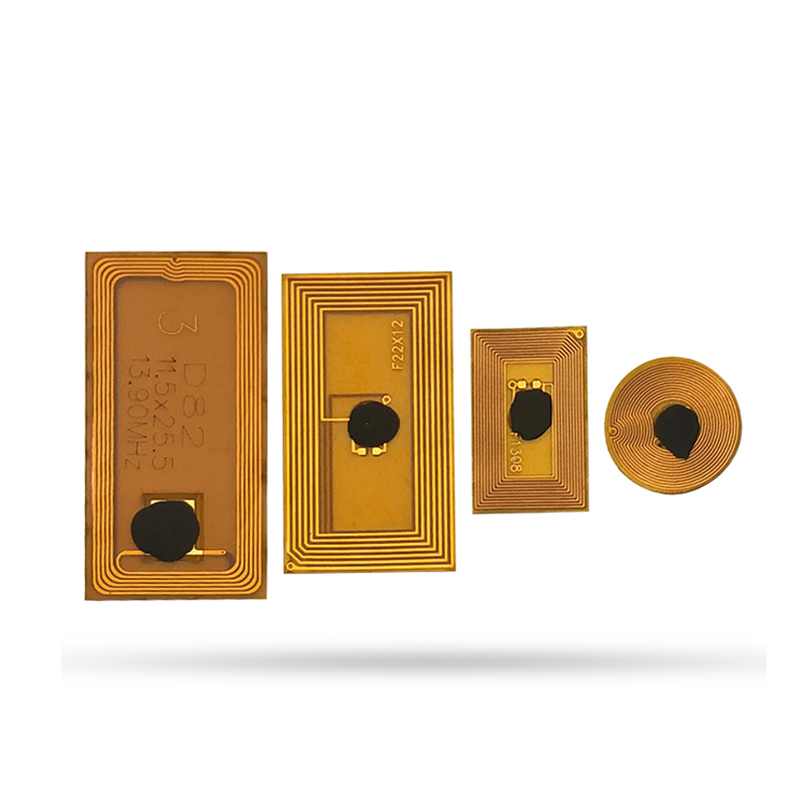 FPC tags · Store catalog
Embedded Passive NFC FPC Label
Construction: Embedded flexible printed circuit / Power: Passive
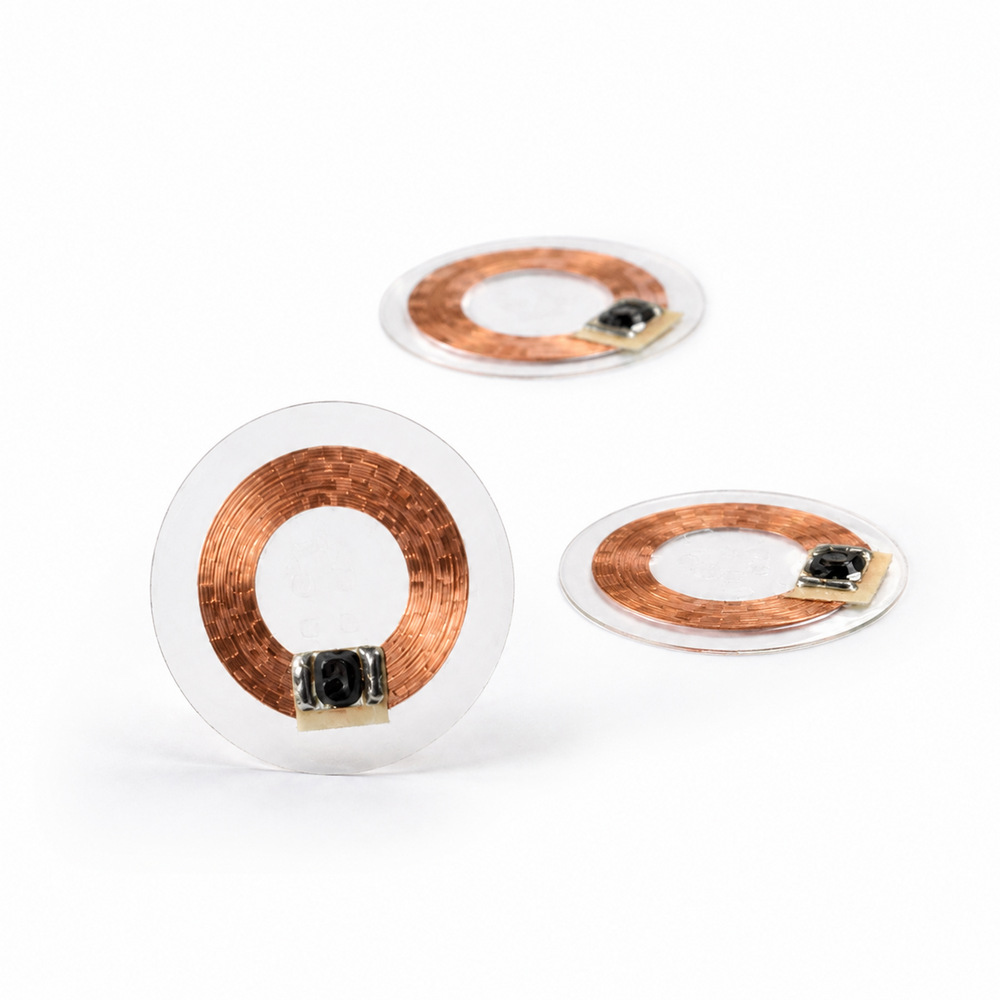 NFC toy & collectible tags · Store catalog
Embedded Passive NFC Toy Tag
Power: Passive / Placement: Inside interactive toys and figurines
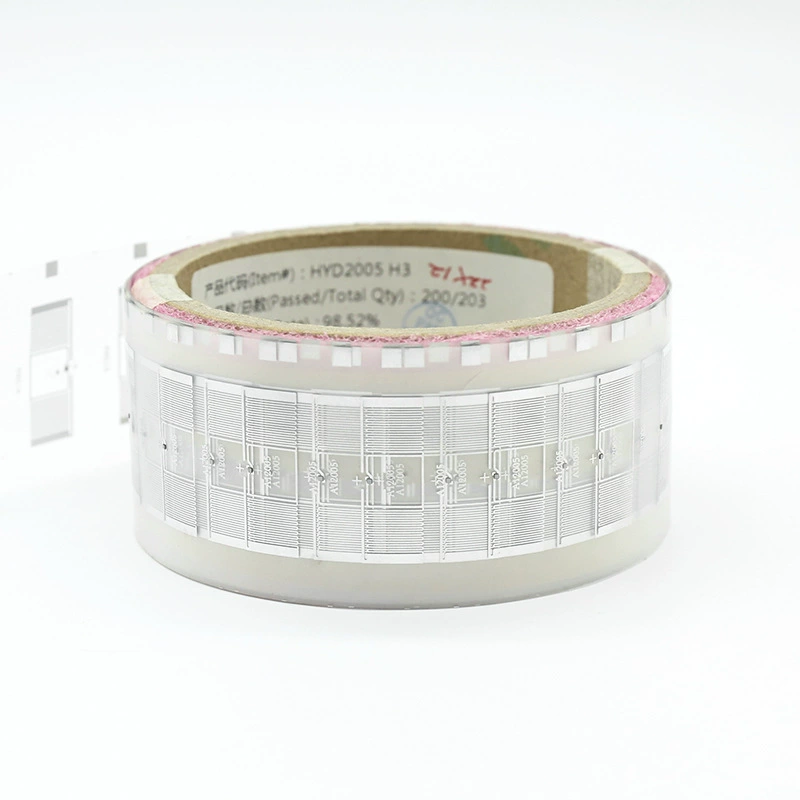 UHF dry inlays · Store catalog
Flexible Passive UHF RFID Dry Inlay
Construction: Dry inlay that can be rolled / Carrier frequency category: Listed under the UHF RFID category in the original attribute table.
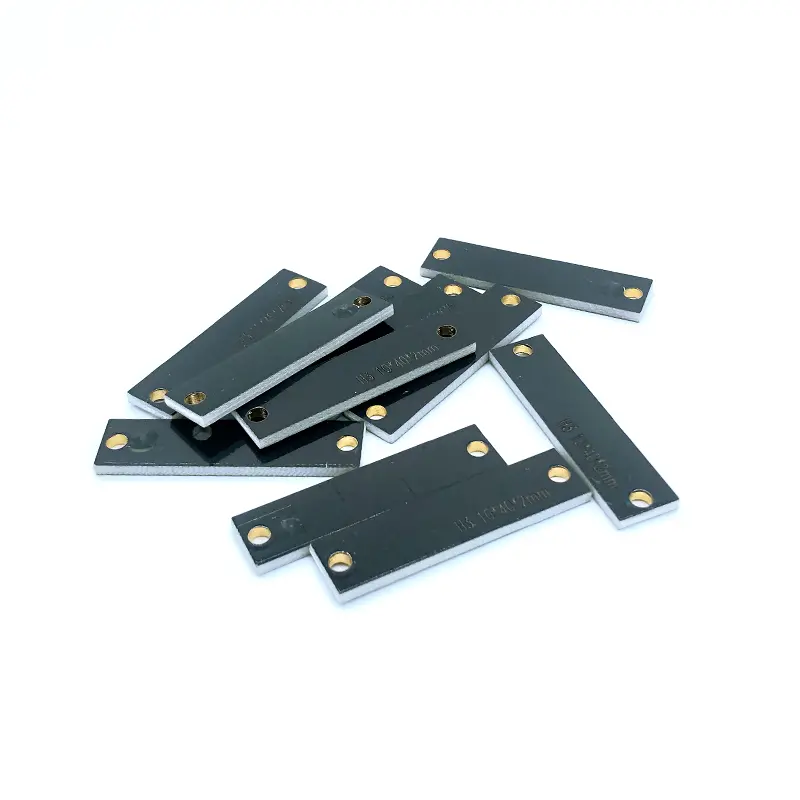 PCB on-metal tags · Store catalog
H3 PCB UHF On-metal Tag
Chip: H3 / Construction: PCB tag for mounting on metal
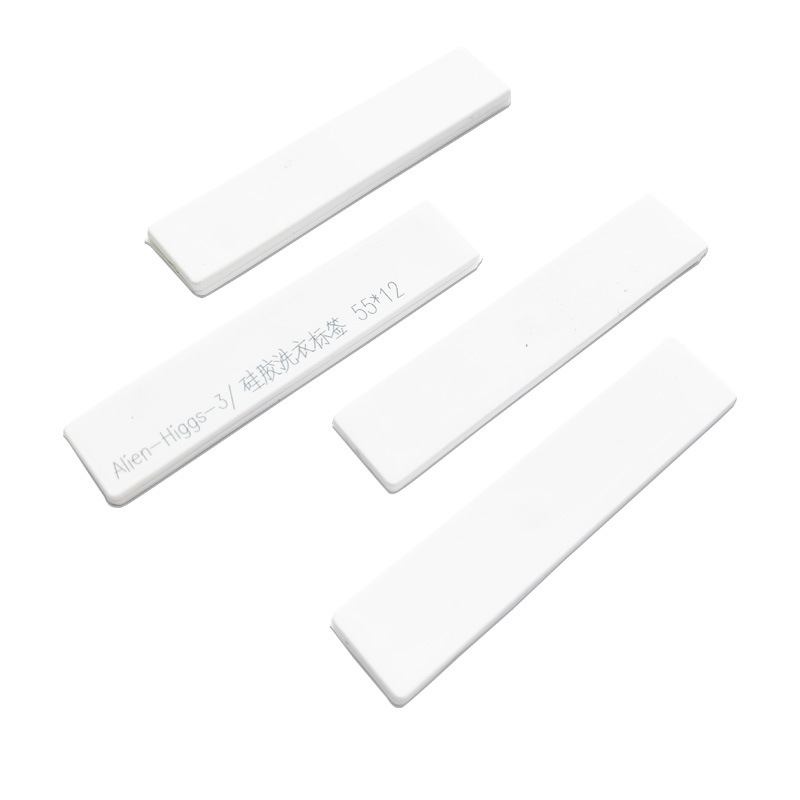 Laundry & linen tags · Store catalog
H3 UHF Hospital Laundry Tag
Chip: H3 / Application: Hospital laundry and asset management
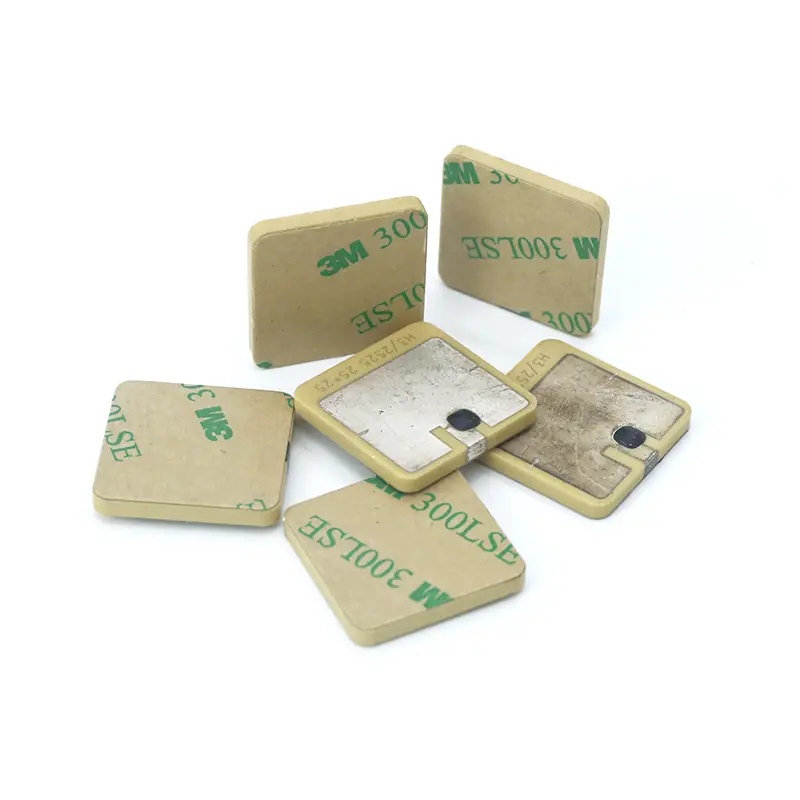 Ceramic on-metal tags · Store catalog
High-Temperature Ceramic UHF On-Metal Tag
Material: Ceramic on-metal construction / Technology: UHF RFID
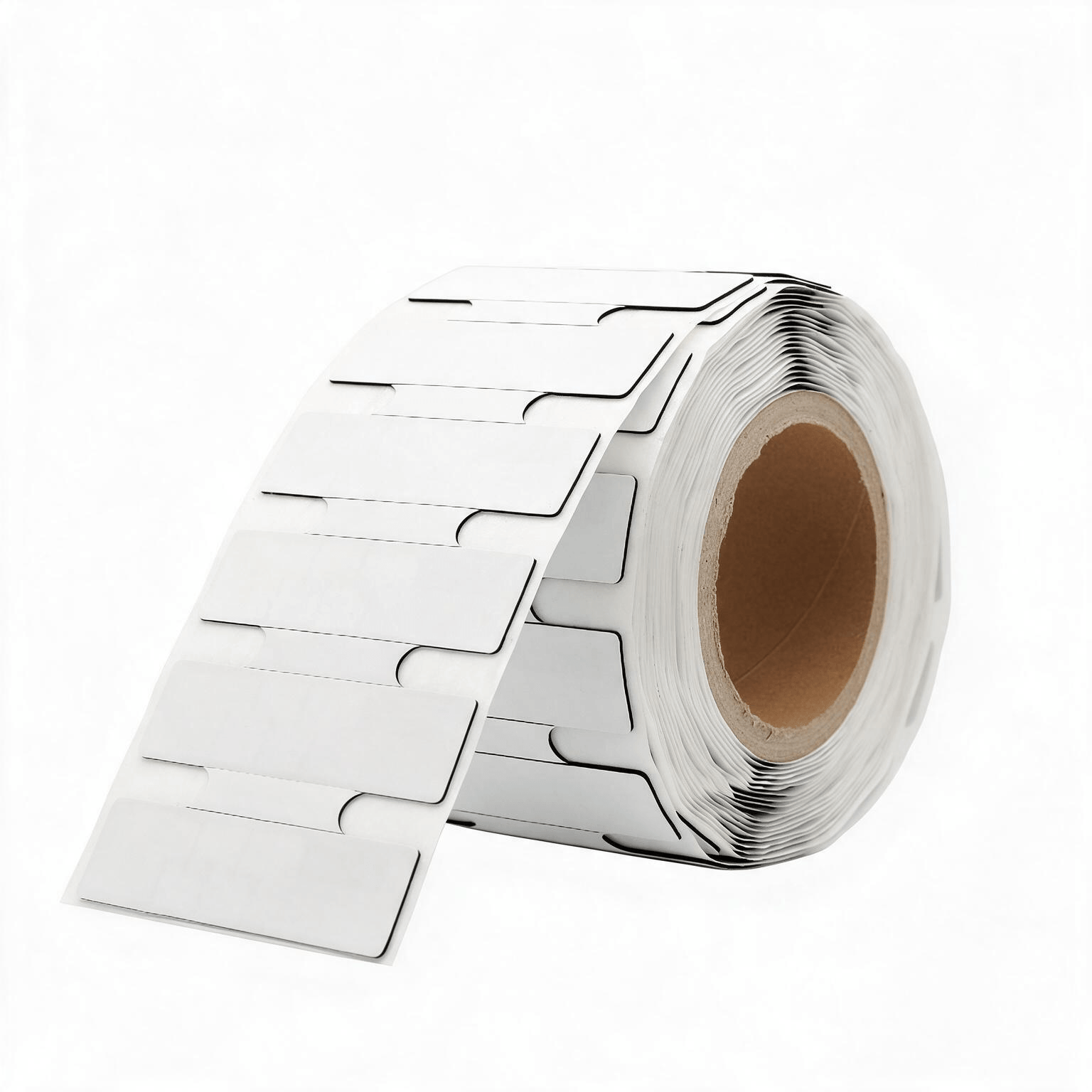 Flexible on-metal labels · Store catalog
MR6 Flexible On-metal Label
Chip: MR6 / Construction: Flexible, printable on-metal label
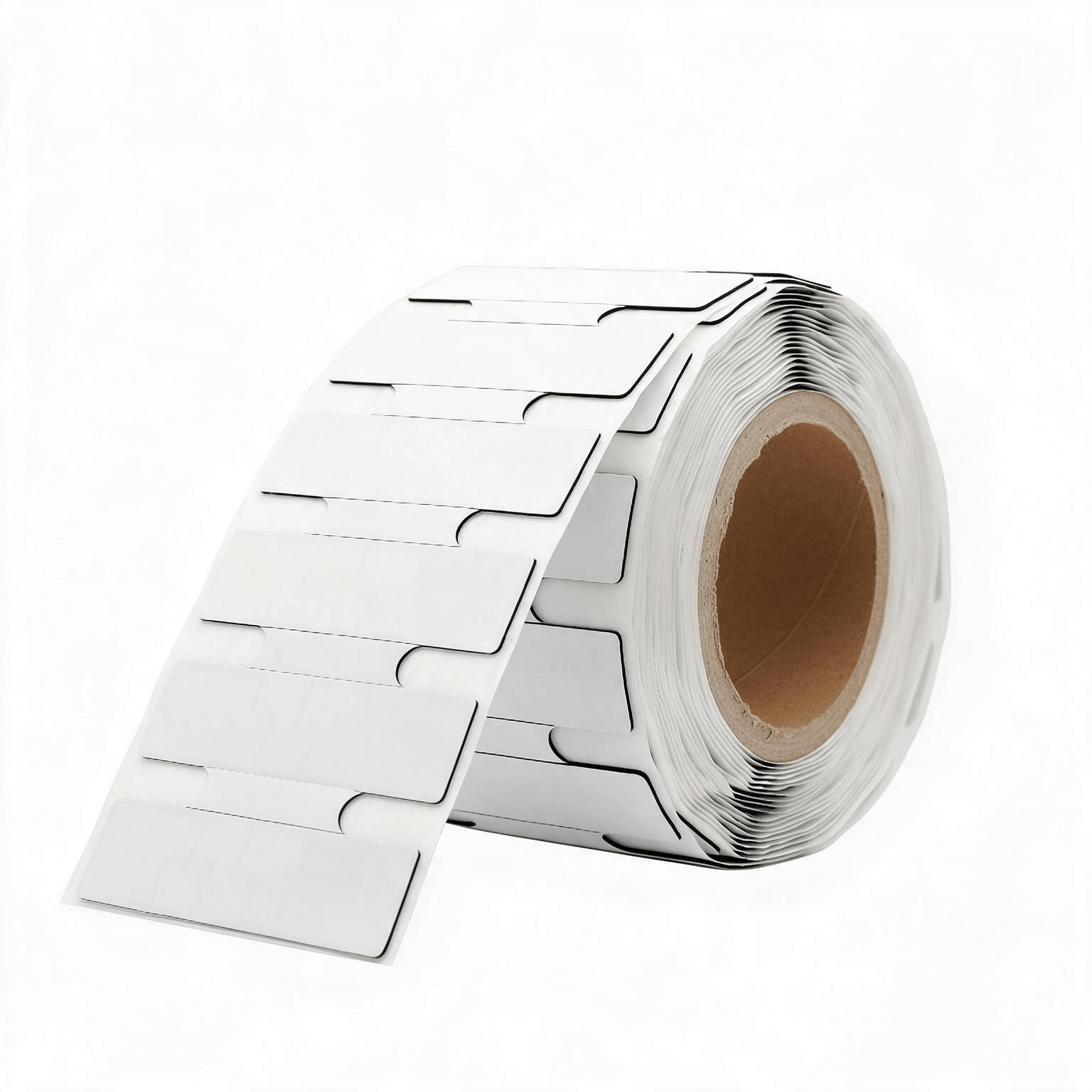 Flexible on-metal labels · Store catalog
Multi-size Printable UHF On-metal Label
Chip designations: Both the listing title and cover name MR6. The title also lists U9, while the cover lists U8. Confirm the second chip before ordering. / Construction: Flexible on-metal label
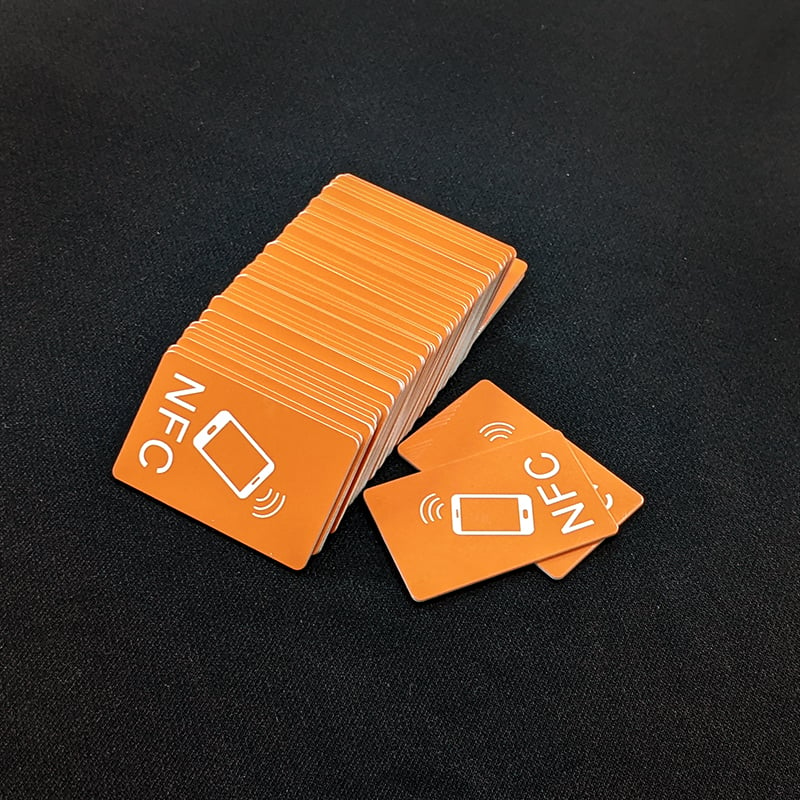 Vehicle key & charging cards · Store catalog
NFC Electric-vehicle Key Card
Existing non-standard sizes: The cover lists three existing compact card sizes: 50 × 30 mm, 45 × 22 mm and 50 × 22 mm. / Form: Nonstandard card
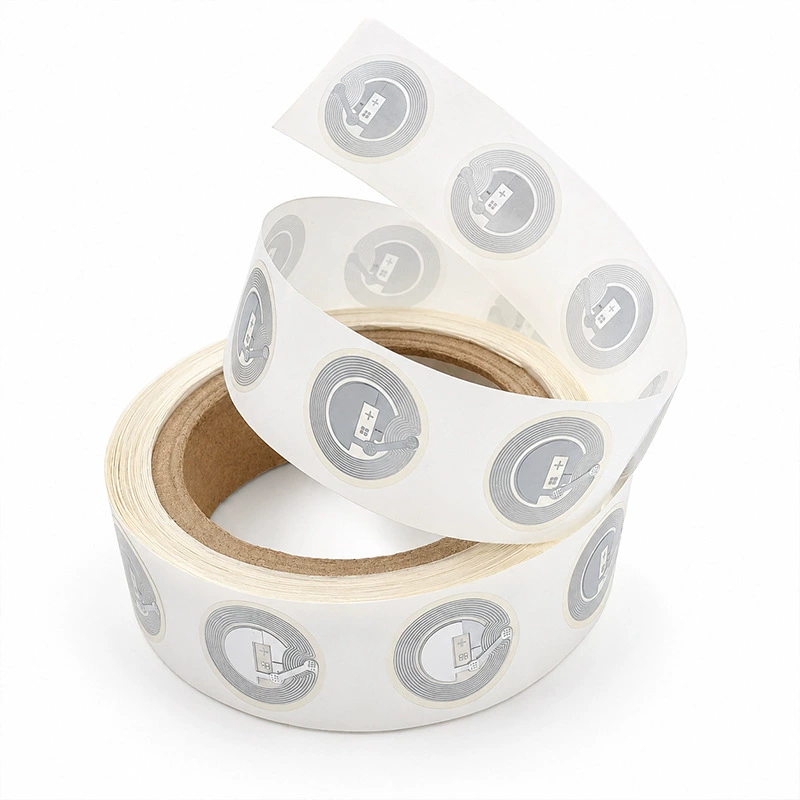 NFC stickers & tap labels · Store catalog
NFC213 Writable Wet Label
Pictured PVC chip-label note: One 25 mm PVC illustration pairs a 215 side caption with NTAG216-PVC label art; confirm the chip for each version. / Chip: NFC213
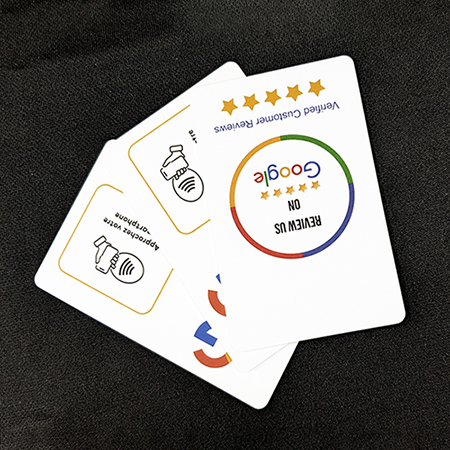 NFC business & review cards · Store catalog
NTAG213 / 215 Contact & Review Card
Listed chip designations: NTAG213 / 215 / Chip options: NTAG213 / NTAG215
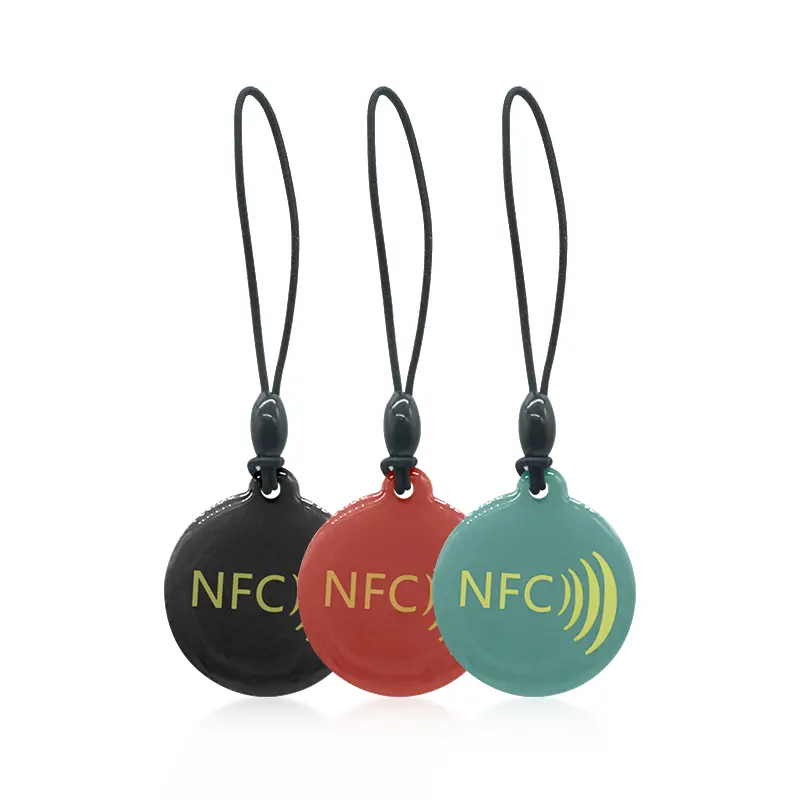 Epoxy key fobs · Store catalog
NTAG213 HF Epoxy NFC Access Key Fob
Chip: NTAG213 / Construction: Epoxy resin key fob
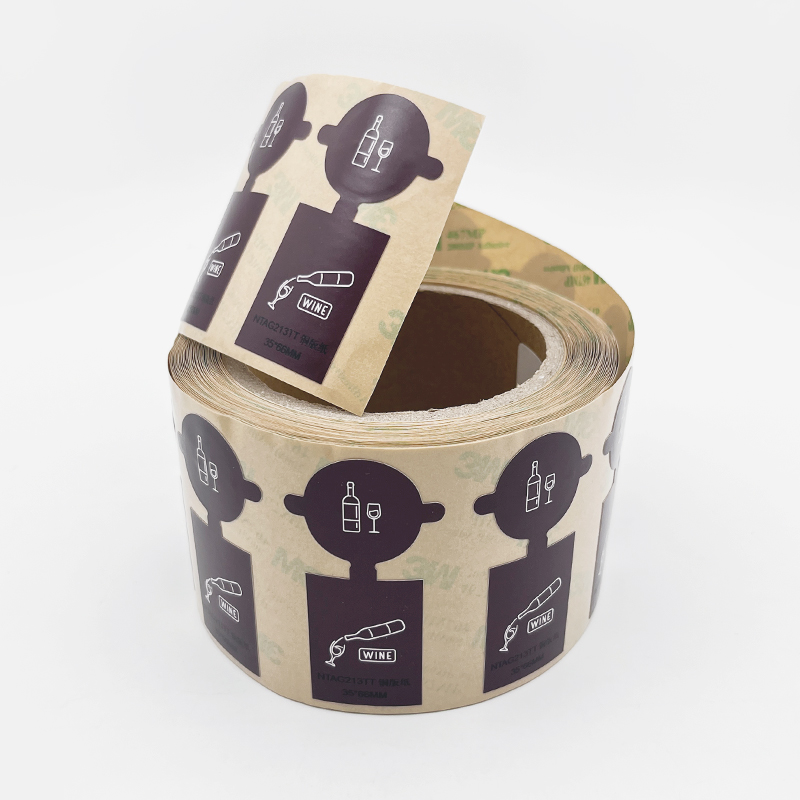 Tamper-evident & traceability labels · Store catalog
NTAG213TT Frangible Wine Label
Chip: NTAG213TT / Construction: Breakable label intended to deter transfer
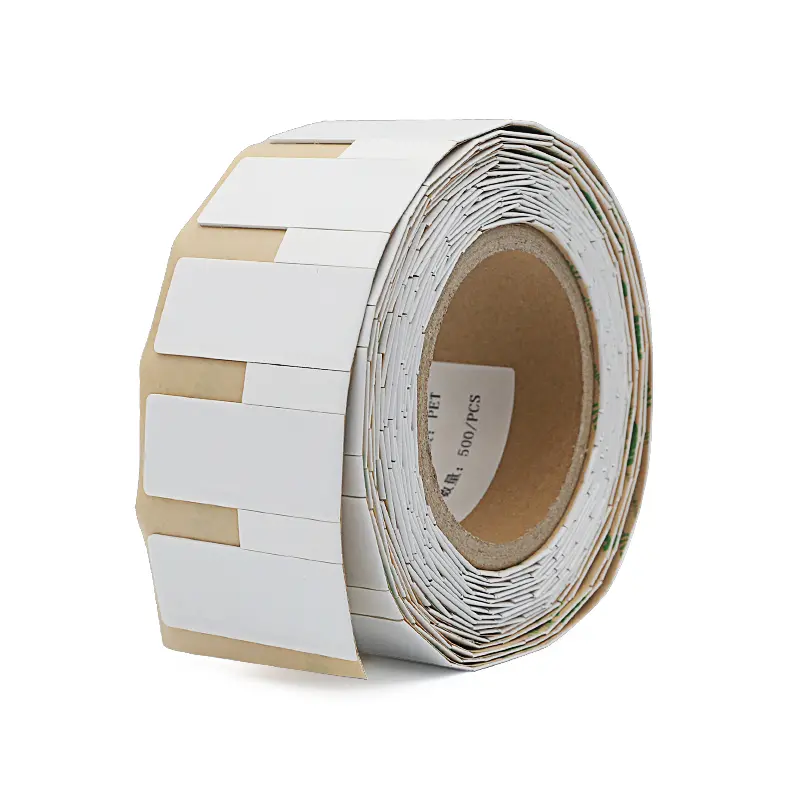 Flexible on-metal labels · Store catalog
Printable Flexible On-Metal Equipment Label
Construction: Printable flexible on-metal label / Frequency: Title names both HF and UHF; specify your reader band when ordering
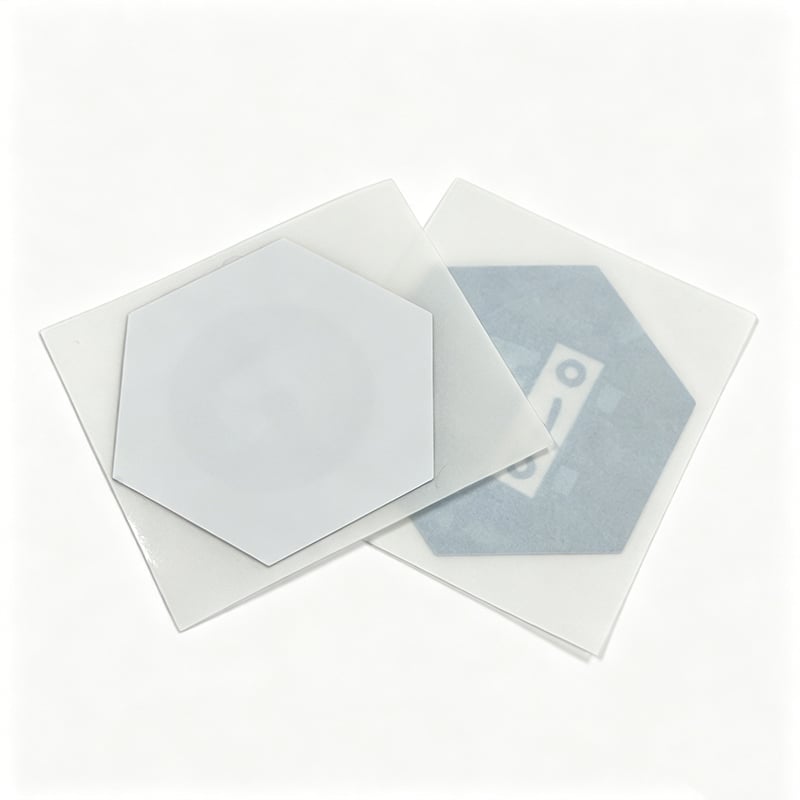 NFC stickers & tap labels · Store catalog
Read / Write NFC Shortcut Label
Chip families and surface protection: The cover lists 213, 215 and 216 chip options with water- and stain-resistant link labels. / Operation: Read and write
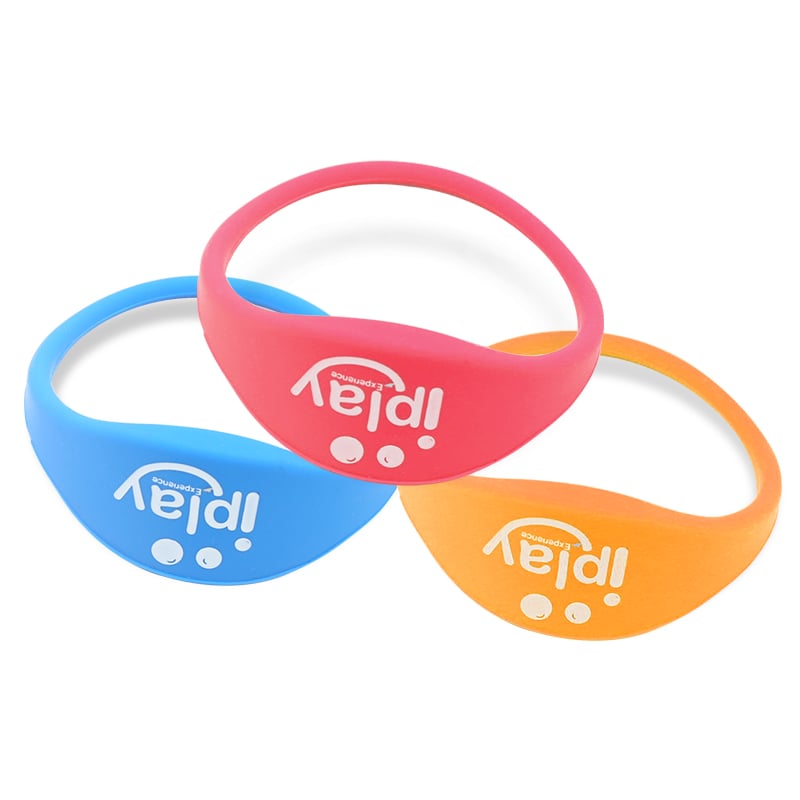 Silicone wristbands · Store catalog
Silicone NFC Sauna & Concert Wristband
Material: Silicone / Listed uses: Saunas and concerts
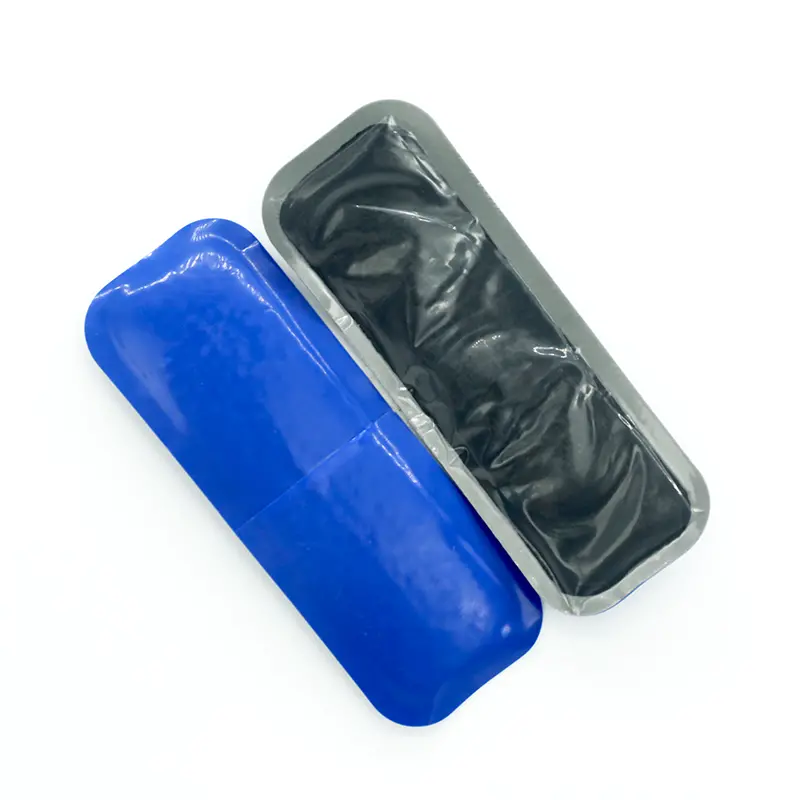 Tire tags · Store catalog
UHF High-Temperature Rubber Tire RFID Tag
Material: High-temperature rubber patch / Technology: Passive UHF RFID
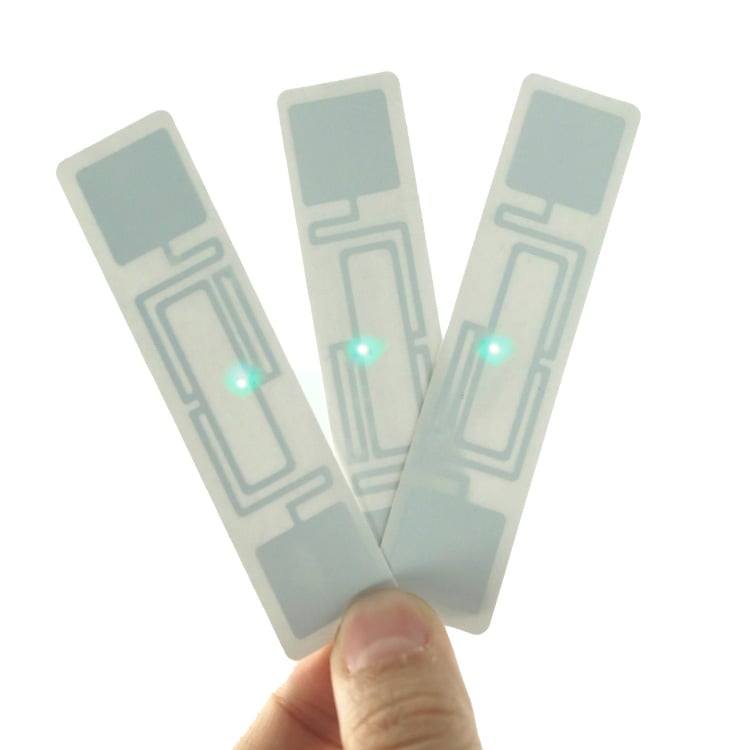 LED locator labels · Store catalog
UHF LED File-location Tag
Location aid: LED light / Application: Locating physical files
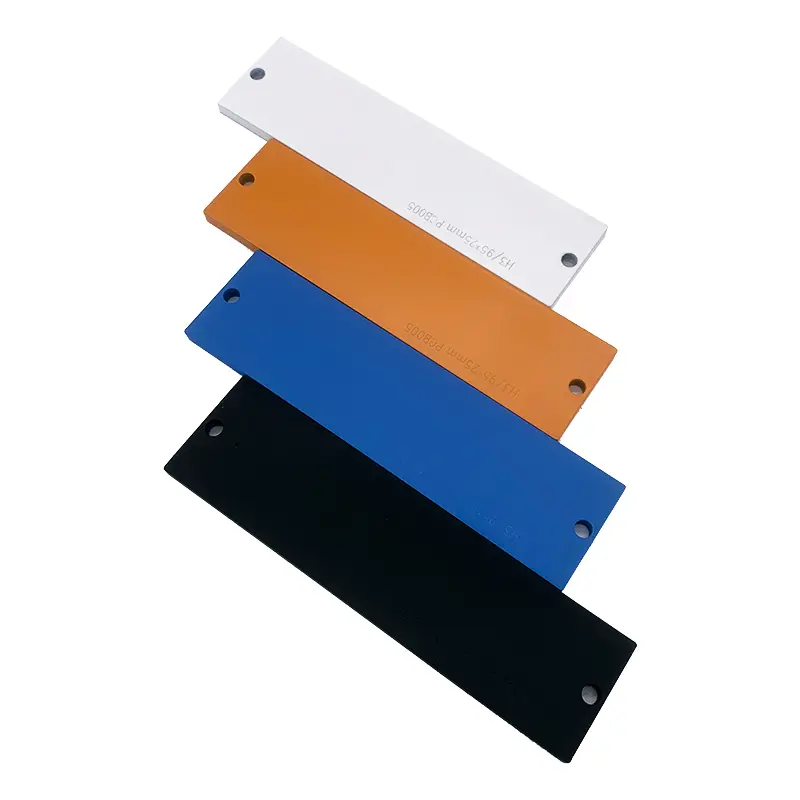 PCB on-metal tags · Store catalog
UHF PCB Power-Grid On-Metal Asset Tag
Construction: High-temperature PCB on-metal tag / Technology: UHF RFID
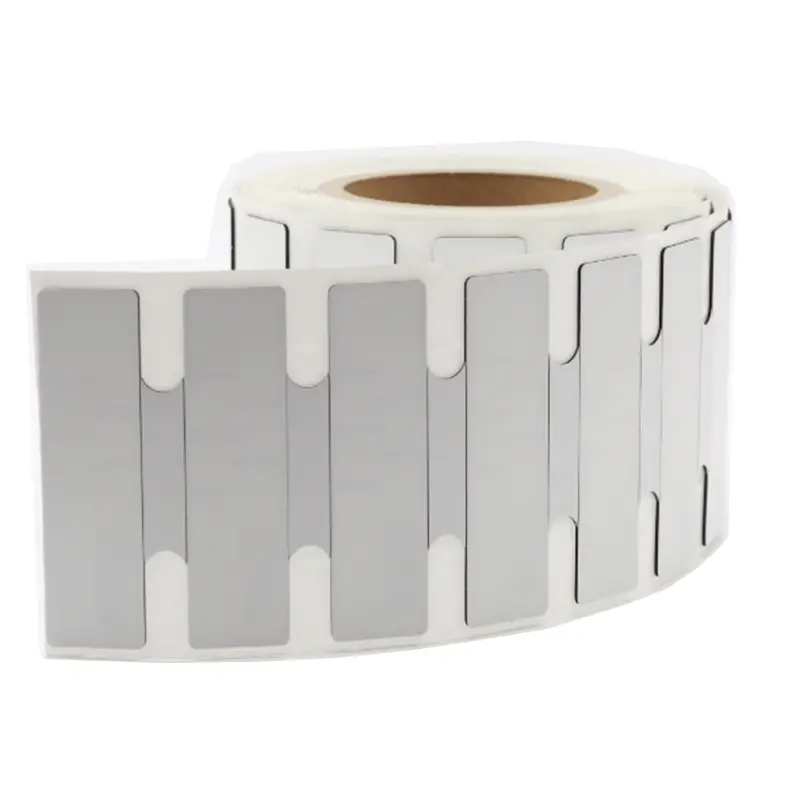 Flexible on-metal labels · Manufacturer reference
100 × 25 mm MR6 On-Metal Label
Chip: MR6 (Customized) ISO/IEC 18000-6C / Size: 100*25mm (Customized)
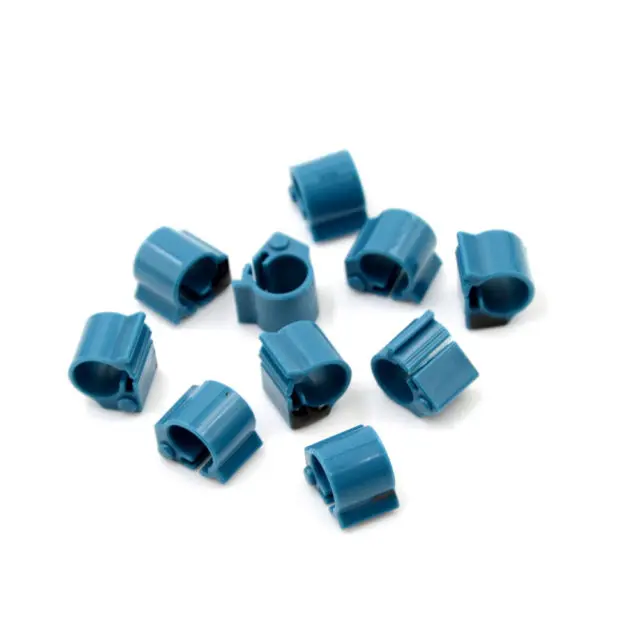 Poultry leg rings · Manufacturer reference
125 kHz Bird Leg Ring
Chip: EM4200 / Size: 12.35*13.6mm
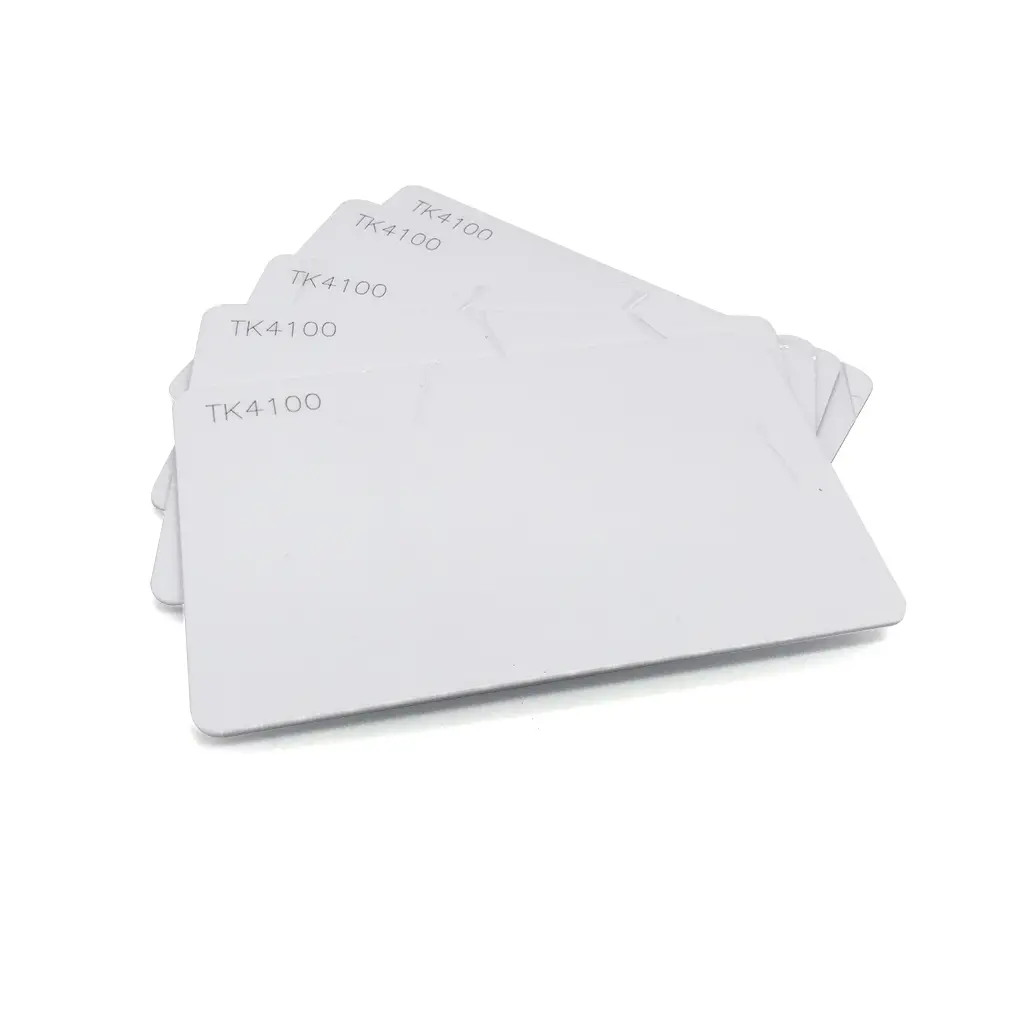 Low-frequency proximity cards · Manufacturer reference
125 kHz LF Access Card
Material: PVC / Chip options: Tk4100/T5577/EM4305
Consulta técnica directa
Solicitar muestras comparativas — UHF vs. HF/NFC vs. LF RFID
Envíe este breve formulario directamente desde esta página, sin cambiar de pantalla.
Preguntas frecuentes de selección
¿Puede una misma etiqueta leerse en un pórtico UHF y con el iPhone del cliente?
Solo mediante etiquetas híbridas de doble frecuencia que combinan ambas antenas (UHF + NFC) en una etiqueta; los tags simples operan en una sola banda.
¿Son iguales las frecuencias UHF en todo el mundo?
No: coexisten bandas regionales como FCC (902–928 MHz) y ETSI (865–868 MHz). Inlays de papel banda ancha cubren 860–960 MHz, mientras tags PCB o cerámicos pequeños suelen sintonizarse por región.
¿Por qué las bibliotecas siguen usando 13,56 MHz en vez de pasarse a UHF?
A 13,56 MHz (ISO 15693), los mostradores leen únicamente la pila depositada sobre la antena sin capturar estanterías cercanas.