
01 / Item-level visibility
UHF Labels & Inlays
Start with the right label format for inventory, apparel and logistics workflows.
UHF · regional bandConfirm chip, dimensions and sample availability in your inquiry.
EXPLORE THE COLLECTION
UHF Labels & Inlays
7 products
Original store gallery
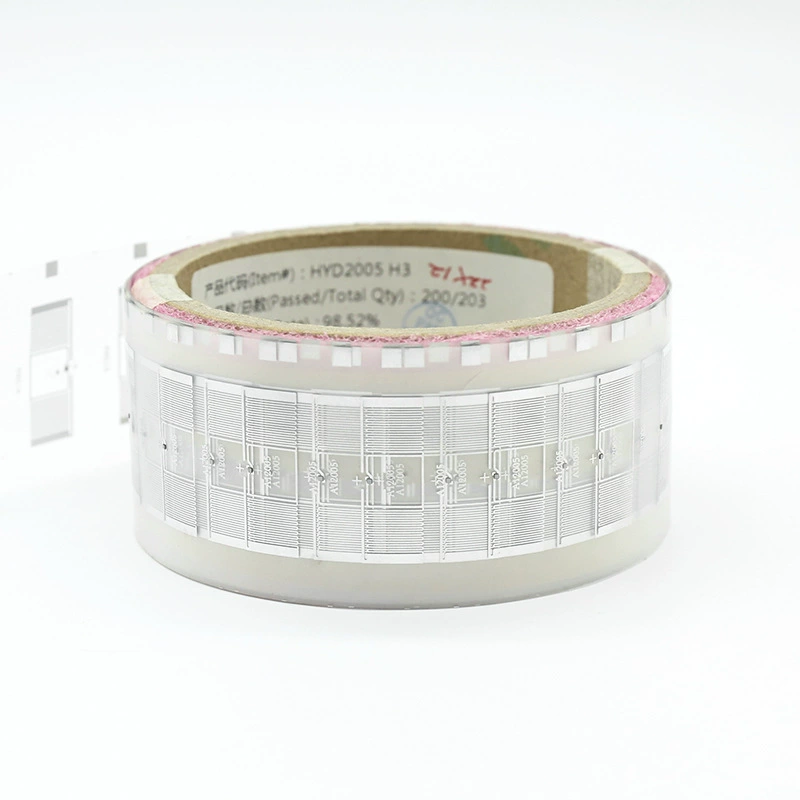
Flexible Passive UHF RFID Dry Inlay
Flexible UHF RFID dry inlay for asset inventory and traceability
View productStore catalog
M4QT UHF Windshield Label
M4QT UHF RFID windshield label with a holographic finish for vehicle management
- Chip
- M4QT
- Finish
- Holographic
Store catalog
UHF Retail Identification Label
UHF RFID identification label for supermarket anti-counterfeiting
- Frequency band
- UHF
- Use
- Retail identification and anti-counterfeiting
Store catalog
Custom UHF Inventory Label
UHF RFID inventory label for retail authentication and stock management
- Frequency band
- UHF
- Listed uses
- Retail inventory and anti-counterfeiting
Store catalog
Tamper-evident UHF Windshield Tag
Tamper-evident UHF RFID windshield tag for vehicle and traffic management
- Placement
- Vehicle windshield
- Use
- Vehicle and traffic identification
Store catalog
Self-adhesive UHF Warehouse Label
Self-adhesive coated-paper UHF RFID label for warehouse stocktaking
- Construction
- Adhesive coated paper
- Use
- Warehouse inventory
Store catalog
Miniature UHF FPC Label
Miniature flexible UHF FPC tag for high-temperature authentication and traceability
- Construction
- Miniature flexible printed circuit
- Frequency band
- UHF
SELECT WITH CONFIDENCE
Start with your application.
UHF labels are a starting point for projects that identify multiple items with a dedicated reader. Choose the antenna and finished label together: packaging material, orientation and available label space all matter.
Specify whether you need a dry inlay, an adhesive wet inlay or a printable finished label. Include your printer model and roll requirements when labels will be printed and encoded in-house.
Before approving a production format, test representative items at the intended read points. A sample on a workbench does not establish performance in a packed carton or on a moving conveyor.
Read the quotation checklistWhat to specify
| Technology | Passive UHF; select a compatible Gen2 implementation |
|---|---|
| Deployment region | Specify country and reader operating band |
| Format to define | Dry inlay, wet inlay or converted label |
| Surface to confirm | Paper, plastic, fabric or other actual substrate |
| Encoding to define | Identifier scheme, serialization and verification |
| Read performance | Validate on the final item with the intended reader |
IN CONTEXT
Where it can fit.
GOOD QUESTIONS
Before you choose.
What is the difference between an inlay and a finished label?
An inlay combines a chip and antenna on a substrate. A finished label adds the materials needed for its intended printing, adhesive and handling process. Confirm the exact construction before ordering.
Will one UHF label work in every country?
Do not assume this. Share the deployment countries and reader settings so antenna selection and local operating requirements can be checked for the project.
Can I specify a guaranteed read distance?
Define a measurable target and test conditions instead of relying on a headline distance. Reader setup, item material, tag orientation and the surrounding environment influence results.
Bring your project into focus.
Share the application, quantity and the details you already know. Start with the requirement, even if the specification is still open.
Build your inquiry